
The Suppressor Registry After the Tax Went to Zero
After Congress set suppressor taxes at zero, Judge Hendrix held that the challenged federal rules exceeded Congress’s enumerated powers. Suppressors should receive the same treatment as ordinary firearms.

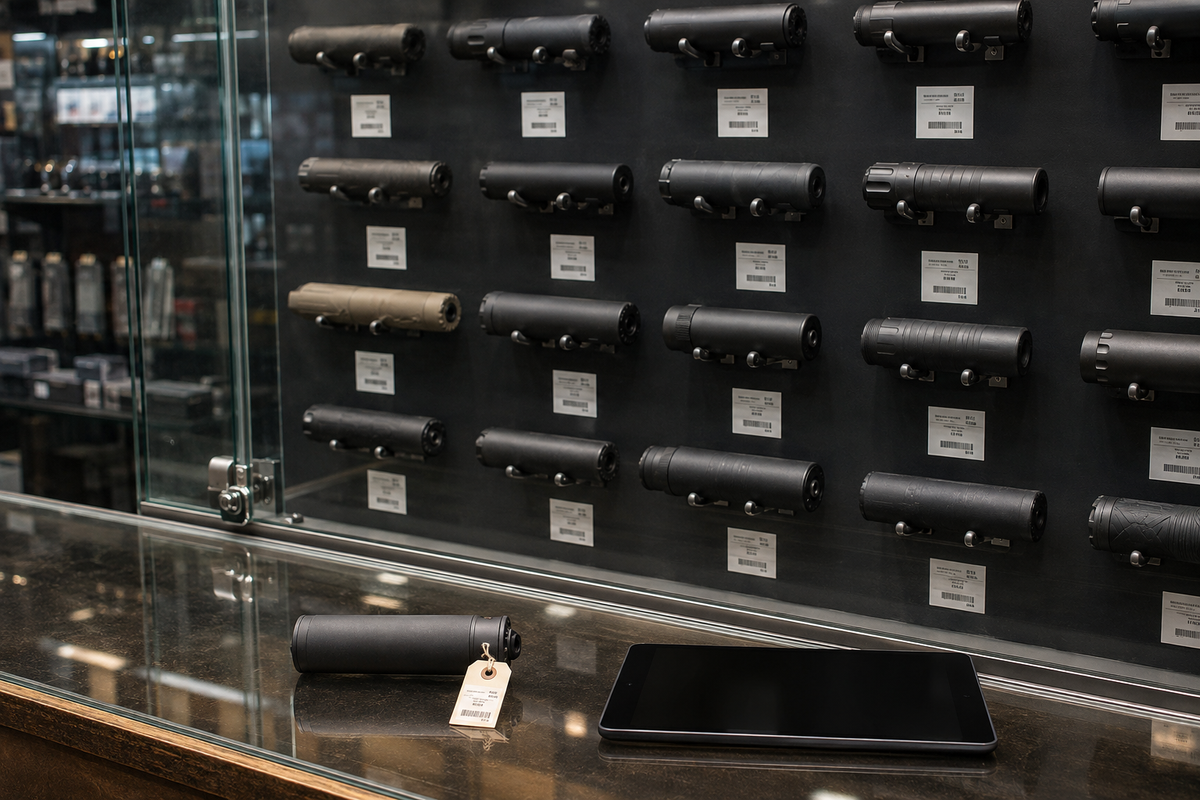
Judge Hendrix held that federal suppressor provisions surviving Congress’s elimination of the making and transfer taxes exceeded Congress’s enumerated powers. Any appellate defense of those provisions must explain why suppressors may bear federal approval, registration, and possession rules beyond those governing ordinary firearms.
Effective January 1, 2026, Congress set the National Firearms Act’s making and transfer taxes at zero for suppressors, short-barreled rifles, short-barreled shotguns, and firearms classified as “any other weapon,” and retained $200 rates for machineguns and destructive devices.[1]
The amendment left advance approval, identifying disclosures, registration, and criminal penalties of up to ten years in place for the zero-tax categories, and the Bureau of Alcohol, Tobacco, Firearms and Explosives stated that those requirements remained “in full force and effect.”[2]
On August 5, 2026, United States District Judge James Wesley Hendrix held that the challenged provisions exceeded Congress’s enumerated powers after rejecting the Taxing Clause, occupational-tax, Necessary and Proper Clause, and Commerce Clause theories offered by the government. His party-specific injunction took effect on August 13, and the United States’ ordinary sixty-day appeal period runs through October 5, 2026.[3]
Federal law already defines a suppressor as a firearm under the Gun Control Act, which continues to govern licensed dealers’ records, background checks, interstate transfers, and sales to prohibited persons.[4] Congress should therefore subject suppressors to the same federal rules that govern other firearms and eliminate the additional National Firearms Act approval and registry layer.
That policy judgment remains distinct from the facial question because some commercial applications may fall within the commerce power.[5]
The vanished taxes no longer support the registry
Congress structured the 1934 National Firearms Act around taxation because the federal government possesses enumerated powers and lacks a general police power over local crime. The Act imposed annual occupational taxes on importers, manufacturers, and dealers, added a $200 tax to each covered transfer, and required identifying forms that allowed federal officials to assess and collect those liabilities.[6] In Sonzinsky v. United States, the Supreme Court upheld the annual dealer tax despite its deterrent effect and negligible revenue, and expressly reserved the validity of the separate transfer tax and accompanying regulations. The decision therefore sustained an actual annual tax imposed on a dealer who also had to register, leaving the per-transfer regime outside the Court’s holding.[7]
The Supreme Court permits a tax to influence conduct and has upheld a levy that generated negligible revenue, although it has also treated the production of at least some revenue as an essential feature of taxation. Because Sections 5811 and 5821 now impose zero liability on suppressor making and transfer, those provisions supply no revenue-producing end for the retained federal per-item regime.[8] The Necessary and Proper Clause permits Congress to choose means plainly adapted to carrying an enumerated power into execution. When a command directly regulates interstate commerce, the Commerce Clause itself may supply the necessary constitutional authority without requiring a separate Necessary and Proper Clause inquiry. Because a zero-dollar transfer generates no liability, the retained registry must find its constitutional foundation in either the surviving occupational tax or the commerce power.[9]
The occupational tax supplies an attenuated theory
Importers, manufacturers, and dealers continue to pay an annual occupational tax and register their businesses, which gives the government a possible constitutional foundation for some information-gathering requirements. The government argued that individual applications and registry records can reveal repeated activity consistent with an unregistered business and therefore assist assessment or collection of the surviving tax.[10] United States v. Doremus supplies the government’s strongest authority because the Court upheld recordkeeping and sales restrictions as reasonable means of enforcing an occupational tax on narcotics businesses. Section 5848 leaves the theory some room because its use restriction principally protects a natural person in a criminal proceeding concerning a prior or concurrent violation, yet preserves administrative action, civil collection, independently developed evidence, entity records, and prosecutions for false information.[11]
Even so, the occupational-tax theory likely fails because a limited levy on businesses supplies a remote basis for applying the retained federal per-item regime to private persons who owe no occupational tax. Sections 5801 and 5802 already tax and register firearms businesses, whereas the challenged provisions govern each covered item and reach makers, recipients, borrowers, and possessors outside that tax base.[10:1] Hendrix also found the enforcement evidence attenuated, although referral counts alone carry limited weight because deterrence and administrative screening could explain a small number of referrals. Occasional identification of unregistered business activity through the disclosure rules does not establish that the full per-item regime is plainly adapted and proper as a tax-collection measure.[10:2]
Commerce power narrows the available relief
Hendrix rejected the Commerce Clause theory because the National Firearms Act’s placement, history, and operative design showed a taxing-power enactment, and the challenged provisions lacked a jurisdictional element connecting their applications to interstate commerce.[12] Other provisions expressly address unregistered firearms moving in interstate commerce and firearms imported into the United States in violation of federal law, and Hendrix read Sections 5861(j) and 5861(k) as evidence that Congress omitted a comparable limit from the challenged commands.[13] Woods v. Cloyd W. Miller Co. supports the government because an enactment need not recite the constitutional power sustaining it, although legislative history helped the Court identify the war power in that case. A reviewing court may therefore treat the Act’s tax origins and missing jurisdictional elements as evidence of statutory scope and still ask whether a challenged application lies within the objective reach of the commerce power.[14]
Fifth Circuit precedent points in different directions because Ross and Parker described taxation as the Act’s constitutional foundation. Ardoin later adopted an earlier circuit decision stating that the Act may rest on either taxation or interstate commerce, and Arce, decided two years after United States v. Lopez, characterized that proposition as a holding entitled to precedential force.[15] Hendrix treated the commerce discussion in Ardoin and Arce as unnecessary to those decisions, relied on Ross and Parker as earlier controlling cases, and concluded that Lopez and United States v. Morrison had displaced any contrary rule. If Arce’s post-Lopez characterization is binding, Lopez cannot supply the intervening-authority exception, leaving a reviewing court to ask whether Morrison or later Supreme Court authority unequivocally overruled that rule or fundamentally changed the analysis in a way that clearly applies. If Arce’s discussion was dictum, the rule of orderliness would not attach, and the earlier-panel tension identified by Hendrix would remain for the reviewing court to resolve.[15:1]
The facial posture may resolve the dispute before a court examines every private application because commercial manufacture, interstate distribution, and dealer sales fall within Congress’s commerce authority under current doctrine. Under the standard Hendrix applied, the plaintiffs must establish that each challenged provision lacks any valid application, and Section 7852(a) directs courts to preserve a provision’s valid applications to other persons and circumstances.[16] A valid commercial application may therefore defeat facial relief as to that provision, leaving purely private conduct for later litigation on a fully developed as-applied record.
The government can invoke Gonzales v. Raich by describing the National Firearms Act as a national system governing the making, transfer, registration, and possession of defined firearms. Because federal law defines a transfer to include lending and giving, exempting private loans could fracture the ownership record and allow unregistered commercial dealing to appear as temporary possession.[17] The limiting inquiry asks whether Congress had a rational basis to conclude that exempting the intrastate conduct would undercut effective regulation of the interstate suppressor market and whether each challenged command is an appropriate means of carrying that regulation into execution.[17:1]
The Gun Control Act generally leaves occasional private intrastate transfers between unlicensed residents outside federal preapproval, which shows that Congress can regulate the commercial firearms market without requiring advance permission for every private loan.[18] A stronger as-applied challenge would involve a suppressor made in one State from in-state materials, lawful under state law, never moved through interstate commerce, and later lent and possessed privately without commercial purpose.
The Gun Control Act would continue to govern suppressors
Removing the challenged National Firearms Act provisions would leave ordinary federal firearms law in place because the Gun Control Act defines a firearm to include a firearm muffler or silencer. Licensed-dealer transactions would remain subject to federal records, background checks, residency rules, and restrictions on sales to prohibited persons, and occasional private transfers would remain governed by the same federal limits that apply to other firearms. States retain general police power to regulate firearms and punish criminal misuse within their authority, subject to the Second and Fourteenth Amendments, and federal regulation must remain tied to an enumerated power.[19]
Restoring a positive making or transfer tax would renew the Taxing Clause argument, although it would also revive a suppressor-specific burden whose operation remains subject to the Second Amendment.[20] A Fifth Circuit panel has held that suppressors are protected “Arms,” and United States v. Peterson treats the National Firearms Act’s shall-issue process as presumptively lawful absent abusive ends through exorbitant fees or lengthy processing delays.[20:1]
A reviewing court may agree with Hendrix’s Taxing Clause analysis and still reverse the judgment on the facial Article I claims and vacate the injunction if each challenged provision has a valid commerce-connected application. Congress can act now by placing suppressors within the ordinary federal firearms framework and eliminating a suppressor-specific layer that no longer collects the taxes for which the National Firearms Act was designed.
Pub. L. No. 119-21, § 70436, 139 Stat. 72, 247–48 (2025); 26 U.S.C. §§ 5811(a)(2), 5821(a)(2). ↩︎
26 U.S.C. §§ 5812(a)–(b), 5822, 5841(a), (e), 5861(b)–(f), 5871; Changes to National Firearms Act Tax Remittance Provisions, 91 Fed. Reg. 25,112, 25,112–13 (May 8, 2026) (to be codified at 27 C.F.R. pt. 479). ↩︎
Silencer Shop Found. v. Bureau of Alcohol, Tobacco, Firearms & Explosives, No. 6:25-CV-056-H, slip op. at 24–55, 65–66 (N.D. Tex. Aug. 5, 2026), ECF No. 136; Final Judgment at 1–2, Silencer Shop Found. v. Bureau of Alcohol, Tobacco, Firearms & Explosives, No. 6:25-CV-056-H (N.D. Tex. Aug. 5, 2026), ECF No. 137; Fed. R. App. P. 4(a)(1)(B), 26(a). The injunction protects the plaintiffs and the members, customers, agencies, and political subdivisions specified in the judgment, and the seven-day stay expired at the end of August 12. Absent a timely tolling motion or an order extending or reopening the appeal period, the sixtieth day falls on Sunday, October 4, making Monday, October 5, the final day under Rule 26(a)(1)(C). ↩︎
18 U.S.C. §§ 921(a)(3)(C), 921(a)(25), 922(a)(1)(A), (a)(3), (a)(5), (b)(3), (b)(5), (d), (t). ↩︎
See U.S. Const. art. I, § 8, cl. 3; United States v. Lopez, 514 U.S. 549, 558–59 (1995); Gonzales v. Raich, 545 U.S. 1, 17, 22 (2005); Moody v. NetChoice, LLC, 603 U.S. 707, 723 (2024); United States v. Rahimi, 602 U.S. 680, 693 (2024); United States v. Salerno, 481 U.S. 739, 745 (1987); 26 U.S.C. § 7852(a). ↩︎
National Firearms Act: Hearings on H.R. 9066 Before the H. Comm. on Ways & Means, 73d Cong. 6, 8, 13–14 (1934); National Firearms Act, ch. 757, §§ 2–4, 48 Stat. 1236, 1237–38 (1934); Silencer Shop Found., slip op. at 3–7. ↩︎
United States v. Sanchez, 340 U.S. 42, 44 (1950); Nat’l Fed’n of Indep. Bus. v. Sebelius, 567 U.S. 519, 564 (2012); 26 U.S.C. §§ 5811(a)(2), 5821(a)(2). ↩︎
U.S. Const. art. I, § 8, cls. 3, 18; United States v. Lopez, 514 U.S. 549, 558–59 (1995); McCulloch v. Maryland, 17 U.S. (4 Wheat.) 316, 421 (1819); United States v. Comstock, 560 U.S. 126, 133–37 (2010); McNutt v. U.S. Dep’t of Just., 173 F.4th 204, 218–21 (5th Cir. 2026), petition for cert. filed, No. 26-204 (U.S. Aug. 14, 2026). ↩︎
Silencer Shop Found., slip op. at 29–38; 26 U.S.C. §§ 5801–5802; 26 U.S.C. § 5848(a)–(b); United States v. Freed, 401 U.S. 601, 606 (1971). ↩︎ ↩︎ ↩︎
United States v. Doremus, 249 U.S. 86, 93–95 (1919); 26 U.S.C. § 5848(a)–(b). ↩︎
Silencer Shop Found., slip op. at 38–55; United States v. Lopez, 514 U.S. 549, 558–68 (1995); United States v. Morrison, 529 U.S. 598, 608–19 (2000). ↩︎
26 U.S.C. § 5861(j)–(k); Silencer Shop Found., slip op. at 44, 47–48. ↩︎
Woods v. Cloyd W. Miller Co., 333 U.S. 138, 144 (1948); see Silencer Shop Found., slip op. at 48–49 (distinguishing Woods). ↩︎
United States v. Ross, 458 F.2d 1144, 1145 & n.3 (5th Cir. 1972); United States v. Parker, 960 F.2d 498, 500 (5th Cir. 1992); United States v. Ardoin, 19 F.3d 177, 179–80 (5th Cir. 1994); United States v. Arce, 118 F.3d 335, 342 (5th Cir. 1997); Silencer Shop Found., slip op. at 49–55; Texas v. United States, 126 F.4th 392, 406–07 (5th Cir. 2025). ↩︎ ↩︎
See Moody v. NetChoice, LLC, 603 U.S. 707, 723 (2024); United States v. Rahimi, 602 U.S. 680, 693 (2024); United States v. Salerno, 481 U.S. 739, 745 (1987); United States v. Lopez, 514 U.S. 549, 558–59 (1995); Gonzales v. Raich, 545 U.S. 1, 17, 22 (2005); Silencer Shop Found., slip op. at 17–24, 55–56; 26 U.S.C. § 7852(a); Ayotte v. Planned Parenthood of N. New Eng., 546 U.S. 320, 328–31 (2006). ↩︎
Gonzales v. Raich, 545 U.S. 1, 17–22 (2005); id. at 33–42 (Scalia, J., concurring in the judgment); 26 U.S.C. §§ 5812(a)–(b), 5822, 5841, 5861; id. § 5845(j). ↩︎ ↩︎
18 U.S.C. § 922(a)(1)(A), (a)(3), (a)(5), (t); see Gonzales v. Raich, 545 U.S. 1, 12–15, 18–22 (2005); id. at 34–42 (Scalia, J., concurring in the judgment); McNutt v. U.S. Dep’t of Just., 173 F.4th 204, 218 & n.12, 220–21 (5th Cir. 2026), petition for cert. filed, No. 26-204 (U.S. Aug. 14, 2026). ↩︎
18 U.S.C. §§ 921(a)(3)(C), 921(a)(25), 922(a)(1)(A), (a)(3), (a)(5), (b)(3), (b)(5), (d), (t); United States v. Morrison, 529 U.S. 598, 618 (2000); District of Columbia v. Heller, 554 U.S. 570, 635 (2008); McDonald v. City of Chicago, 561 U.S. 742, 750 (2010). ↩︎
26 U.S.C. §§ 5811(a), 5821(a); United States v. Comeaux, 179 F.4th 297, 301–02 (5th Cir. 2026); United States v. Peterson, 161 F.4th 331, 340–42 (5th Cir. 2025), cert. denied, 224 L. Ed. 2d 501 (2026). A petition for rehearing en banc in Comeaux remained pending as of September 3, 2026, and its timely filing canceled the scheduled mandate date. See Docket, United States v. Comeaux, No. 24-30307 (5th Cir.), ECF No. 136 (petition filed July 2, 2026), ECF No. 150 (government response filed July 20, 2026); Fed. R. App. P. 41(b). ↩︎ ↩︎