Seeing Was Believing: Deepfakes, Rule 901, and Process Proof for Audiovisual Evidence
Generative AI has weakened the old evidentiary force of audio, video, and photographs. This Article argues that courts should answer concrete deepfake challenges through claim-specific process proof under Rule 901.

Abstract
Generative artificial intelligence has made it cheap to create audio, video, and photographs that appear to capture a person, statement, place, or event. Evidence law must account for that change because courts and juries regularly receive audiovisual evidence to prove occurrence, identity, assent, or conduct. A recording may identify a speaker. A photograph may show the condition of a place. A video may show what a person did.
Each use depends on a foundation linking the item to the fact it is offered to prove. Rule 901 requires evidence sufficient to support a finding that the item is what the proponent claims it is. Rule 902 permits specified records and electronic evidence to be self-authenticated by rule or certification. Rule 702 governs expert testimony and reliability. Together, these rules require the proponent to connect audiovisual evidence to the factual claim made about it, rather than letting appearance carry the proof by itself.
Deepfakes make that foundational connection harder to assess because they reduce the cost of creating evidence that appears genuine. NIST states that deepfake creation is now a low-cost, low-effort process and that current detection systems can lose 45 to 50 percent of their performance when moved from academic testing to operational deployment.[1] A 2023 PLOS ONE study found that 529 listeners correctly identified speech deepfakes only 73 percent of the time in English and Mandarin experiments.[2] Those findings do not establish that every fake is indistinguishable from genuine evidence, but they show that courts should hesitate before allowing appearance alone to carry the evidentiary force it once carried.
This Article describes that reduced force as the credibility discount. The credibility discount is the reduced default confidence that decisionmakers give audiovisual evidence once synthetic media becomes common enough that appearance alone can no longer support the same inference. The discount is not a rule of admissibility. It explains why Rule 901 disputes over audiovisual evidence should require closer attention to source, custody, metadata, corroboration, and forensic review.
To translate the credibility discount into authentication practice, this Article proposes a process-proof approach. When the proponent offers audiovisual evidence to prove identity, occurrence, assent, or conduct, and the opponent identifies concrete grounds to suspect AI generation or material alteration, the court should require foundation evidence matched to the claim made about the item. That foundation may include testimony from the person who captured the evidence, device records, platform records, timestamps, hash values, chain of custody, metadata, forensic review, or independent corroboration.
The process-proof approach should remain narrow. A party seeking a deepfake hearing should identify concrete grounds for doubt, rather than rely on the mere possibility of AI generation. Once that showing is made, the proponent should establish more than the existence of a file. The proponent should show why the file is what the proponent claims it is and why the file supports the factual inference for which it is offered.
Introduction
Evidence law permits a party to prove a fact by connecting an item to the person, event, place, or condition it is offered to establish. A signature may show assent when it can be tied to the signer. A recording may identify a speaker when it can be tied to the voice and the circumstances of capture. A photograph may show the condition of a place when it can be tied to a source, time, and location. A video may show conduct when it can be tied to the event it appears to depict. Each inference depends on more than the item's appearance. It depends on a foundation linking the item to the fact the proponent asks it to prove.
Audiovisual evidence carries unusual force because it makes the event feel closer to the factfinder. Testimony requires the factfinder to credit a witness's memory. A document requires the factfinder to interpret written words. A recording lets the factfinder hear an apparent speaker, and a video lets the factfinder watch apparent conduct. That sensory quality gives audiovisual evidence practical power in settlement negotiations, workplace investigations, compliance reviews, board decisions, agency proceedings, and jury deliberations.
Because that sensory quality can give audiovisual evidence more persuasive force than its foundation warrants, evidence law has long treated it with caution. Rule 901 requires the proponent to produce evidence sufficient to support a finding that the item is what the proponent claims.[3] Rule 403 permits exclusion when probative value is substantially outweighed by dangers such as unfair prejudice, confusion, or misleading the jury.[4] Those rules rest on a practical concern: an exhibit can persuade beyond the inference its foundation supports.
That foundation problem has become harder because generative AI lowers the cost of fabrication. A synthetic voice, image, or video can now be made with less money, less skill, and less access than older forms of audiovisual deception usually required. The lower cost weakens the ordinary inference from appearance. When fabrication becomes easier, a file that looks or sounds genuine gives less reason, by itself, to believe that it came from the asserted source or captured the asserted event.
That weakened inference has already appeared outside court. In January 2024, Hong Kong police received a report after an employee transferred HK$200 million in fifteen transactions to five local bank accounts following a video conference with people who appeared to be company officers. Arup later confirmed that it was the company involved and that fake voices and images were used.[5] The fraud worked because the employee saw and heard apparent authority in a familiar business setting.
The litigation problem therefore runs in both directions. A party may offer synthetic evidence as genuine. A defendant may also try to escape genuine evidence by saying, in effect, "that is AI." Chesney and Citron call this second risk the liar's dividend: as the public learns that audio and video can be convincingly faked, a person accused by genuine audiovisual evidence may find it easier to deny what the evidence shows. For Rule 901, courts must screen false exhibits without letting a bare deepfake accusation weaken genuine ones.[6]
The same dynamic can arise in litigation. A party may offer a recording to prove that a defendant made a threat, a video to prove that a person entered a building, or a photograph to prove the condition of property. In each setting, the opponent may have concrete grounds to suspect AI generation or material alteration. But the challenge should be grounded in the item itself, its source, its custody, or surrounding evidence. A party should not be able to convert every damaging recording into an authentication contest by invoking AI in the abstract.
Courts should address that challenge at the Rule 901 stage before leaving it to weight. When audiovisual evidence is offered to prove identity, occurrence, assent, or conduct, and the opponent identifies concrete grounds to suspect AI generation or material alteration, the proponent should supply process proof matched to the claim made about the item. That proof may include source, custody, metadata, device records, platform records, hash values, forensic review, or independent corroboration. The point is limited: as appearance becomes easier to manufacture, appearance alone should carry less authentication force, while a bare accusation of artificiality should carry no force at all.[7]
I. The Old Audiovisual Baseline
Traditional evidence law already had tools for familiar audiovisual distortion. A photograph could be staged or cropped. A recording could be clipped or removed from context. A video could mislead through angle, timing, lighting, editing, or omission.[8] Rules 901 and 403 allowed courts to test those risks by asking what the item was and whether its persuasive force exceeded its proper evidentiary use.
In practice, however, audiovisual evidence often carried unusual force because it seemed to present the event itself.[9] A witness described what he saw; a video seemed to show the conduct. A witness identified a voice; a recording seemed to preserve the speaker's words, tone, and cadence. The medium shortened the perceived path between proof and event.
That practical force rested partly on the old cost structure of fabrication. Before modern generative tools, a convincing fake image, recording, or video usually required source material, technical skill, equipment, and time. Those barriers left room for deception, yet they limited who could make convincing fakes, how quickly they could be made, and how widely they could be deployed.
That cost structure shaped routine authentication practice, even if doctrine rarely named it. Courts could rely on familiar Rule 901 methods because those methods often carried enough force in ordinary cases. A witness with knowledge could identify a photograph. A person familiar with a voice could identify a speaker. Distinctive characteristics could authenticate a writing, recording, or image. Those methods remain useful, but their force depends on factual assumptions that generative AI has weakened.
The old baseline was therefore practical rather than formal. Evidence law never adopted "seeing is believing" as a rule, but many factfinders still treated audiovisual evidence as if appearance supplied a shortcut to trust.[10]
II. Deepfakes and the Cost of Fabrication
False evidence long predates generative AI. Parties have offered forged documents, staged photographs, edited recordings, and false testimony for as long as courts have tried to separate proof from deception. Deepfakes change the baseline because they make persuasive false audiovisual evidence cheaper to create, easier to distribute, and available to people who lack older forms of technical skill, equipment, or production access.[11]
NIST describes that shift in practical terms. It characterizes deepfake creation as a low-cost, low-effort process that is widely available, and states that a social-media photograph can be transformed into a hyper-realistic deepfake in seconds.[12] NIST also reports that current detection systems can lose 45 to 50 percent of their performance when moved from academic evaluation to operational deployment.[13] Those findings support a limited evidentiary point: fabrication is easier to attempt, and detection should be treated as one possible tool rather than a complete answer to every authentication dispute.
Speech deepfakes create the same problem for voice identification. In a PLOS ONE study by Kimberly Mai, Sergi Bray, Toby Davies, and Lewis Griffin, 529 participants heard genuine and deepfake audio in English and Mandarin and correctly identified the deepfakes 73 percent of the time.[14] The authors found that examples improved listener performance only slightly.[15] Those results counsel caution when a disputed recording depends heavily on voice resemblance.
The scale of investment and institutional adoption points in the same direction. Stanford's 2025 AI Index reported $33.9 billion in global private investment in generative AI in 2024, an 18.7 percent increase from 2023, and reported that 78 percent of organizations used AI in 2024, up from 55 percent in 2023.[16] Those figures fall short of proving that deepfakes will defeat every factfinder, but they do support a narrower point: generative tools are likely to become more common in institutional life, including the settings where audiovisual evidence is created, preserved, and later offered as proof.
That risk has already appeared in law-enforcement warnings. The FBI's Internet Crime Complaint Center warned in December 2024 that criminals use AI-generated images for fake profiles and identification documents, AI-generated audio to impersonate public figures and personal relations, and AI-generated video for chats with alleged company executives or other authority figures.[17] Those uses map onto the same inferences courts often draw from audiovisual evidence: identity, authority, and occurrence.
The Hong Kong transfer incident shows how that operational risk becomes an evidentiary problem.[18] The employee acted after seeing and hearing apparent officers in a video conference. If the same format appears in litigation as an exhibit, the court's task will be to decide whether the item is what the proponent claims and whether its source, custody, and surrounding circumstances support the inference for which it is offered.
III. Rule 901 and the File-Truth Gap
Rule 901 gives courts the doctrinal tool for separating file identity from factual truth because authentication turns on the proponent's claim about the item. The rule asks whether the proponent has produced evidence sufficient to support a finding that the item is what the proponent claims it is.[19] In deepfake disputes, that inquiry must be claim-specific. A party may claim that a file came from a phone, that it was produced in discovery, that it was uploaded to a platform, that it depicts a person, that it records a statement, or that it captures an event. Those claims are related, but each may require a different foundation.
A single exhibit can satisfy one authentication claim while leaving another unsupported. The proponent may show that the exhibit is the same file collected from a phone. That showing establishes file identity, but it does not establish that the file depicts the asserted event. The proponent may show that a recording was produced in discovery. That showing establishes production history, but it does not identify the speaker. The proponent may show that a photograph was uploaded to a platform. That showing establishes platform presence, but it does not establish the place, date, or condition depicted.
That distinction is the file-truth gap. A file can be authentic as a file while remaining unproven as evidence of the asserted event. A chain of custody, production record, or platform record may show that the exhibit is the same file collected from a device or account. It does not automatically show that the file depicts the event, speaker, conduct, or condition the proponent asks the factfinder to infer. Rule 901 should prevent that collapse by requiring foundation evidence directed to the particular inference the proponent seeks to draw.[20]
Rule 902 reinforces the file-truth gap. It permits specified evidence, including certain certified electronic evidence, to be self-authenticated without extrinsic evidence of authenticity.[21] A certification may establish origin, copying method, or process integrity. It may show that a file was accurately copied from a device or system. Standing alone, however, it does not prove that the recorded event occurred or that the depicted person, place, or condition is what the proponent claims.
The proposed amendment to Rule 901 reflects the same concern. The Advisory Committee on Evidence Rules' December 1, 2025 report describes proposed Rule 901(c), under which the opponent would first present evidence sufficient to support a finding that the item was fabricated, in whole or in part, by generative AI, enough to warrant inquiry by the court. The item would then be admissible only if the proponent showed that it was more likely than not authentic.[22] That structure assigns each side a defined burden: the opponent must offer a concrete basis for doubt, and the proponent must then supply proof of authenticity.
Proposed Rule 707 addresses a related but distinct problem. The Committee considered a rule for machine-generated evidence offered without an expert witness when the output would be subject to Rule 702 if stated by a human expert. That proposal concerns the reliability of machine-generated output. Deepfake evidence often raises a different question because the item is offered as ordinary audiovisual evidence, not as expert analysis. In that setting, Rule 901 remains the first component. As of May 2026, those proposals remain pending; the Advisory Committee delayed action on both AI-evidence and deepfake-related amendments while it sought further expert input.[23]
IV. The Credibility Discount
Once synthetic media makes appearance a weaker proxy for authenticity, audiovisual evidence carries what this Article calls the credibility discount. The credibility discount is the reduced default confidence that decisionmakers give audiovisual evidence when appearance alone can no longer support the same inference. It describes a practical change in how courts, juries, companies, and agencies evaluate audiovisual proof. It does not decide admissibility.
The credibility discount turns on both fabrication capacity and decisionmaker awareness. Persuasive fabrication has become easier, and legal and institutional decisionmakers will increasingly know that it has become easier. When those conditions coincide, appearance loses part of its ordinary force. A person unfamiliar with convincing synthetic media may treat a video as nearly conclusive. A person who has encountered voice-cloning scams, AI image tools, or deepfake videos will approach the same exhibit with less default confidence.[24]
The same conditions also produce the liar's dividend. Chesney and Citron identified that risk in 2019, explaining that deepfakes can depict people saying or doing things they never said or did, while machine-learning techniques make those depictions more realistic and harder to detect.[25] They described harms ranging from exploitation and intimidation to personal sabotage, democratic injury, and national-security risk.[26] The evidentiary consequence is narrower but important: as the public learns that audio and video can be faked, a person confronted with genuine audiovisual evidence may deny it by calling it fake.[27]
That insight has a direct evidentiary consequence. Once synthetic media becomes familiar, a party confronted with genuine audiovisual evidence may try to weaken it by calling it AI. The challenge may fail, yet still affect settlement, admissibility, or the jury's assessment of weight. The credibility discount therefore cuts both ways: it reduces undue confidence in fabricated exhibits, while giving courts a reason to reject unsupported attacks on genuine ones.
Jury trials make that screening problem harder. Jurors bring ordinary experience into the jury box, and that experience will increasingly include synthetic media, voice-cloning scams, AI image tools, and deepfake videos. That familiarity may make jurors more careful. It may also make them more receptive to a bad-faith deepfake allegation. Rule 901 should screen those challenges without turning every recording, photograph, or video into an expensive satellite proceeding.[28]
V. Process Proof After a Specific Challenge
A process-proof standard should apply only after a concrete deepfake challenge. The inquiry should begin with the inference the proponent asks the audiovisual evidence to support. Evidence offered to prove identity, occurrence, assent, or conduct depends heavily on the item's connection to external fact. Evidence offered for a minor background point may require less foundation because the asserted inference carries less consequence.
The threshold showing should come from the opponent. Concrete grounds may include inconsistent metadata, missing source files, suspicious production history, visible signs of alteration, conflict with independent records, or evidence that a person had both motive and access to fabricate. Speculation should leave the ordinary burden unchanged. A party who invokes AI in the abstract has not made the showing required for a deeper authentication inquiry.[29]
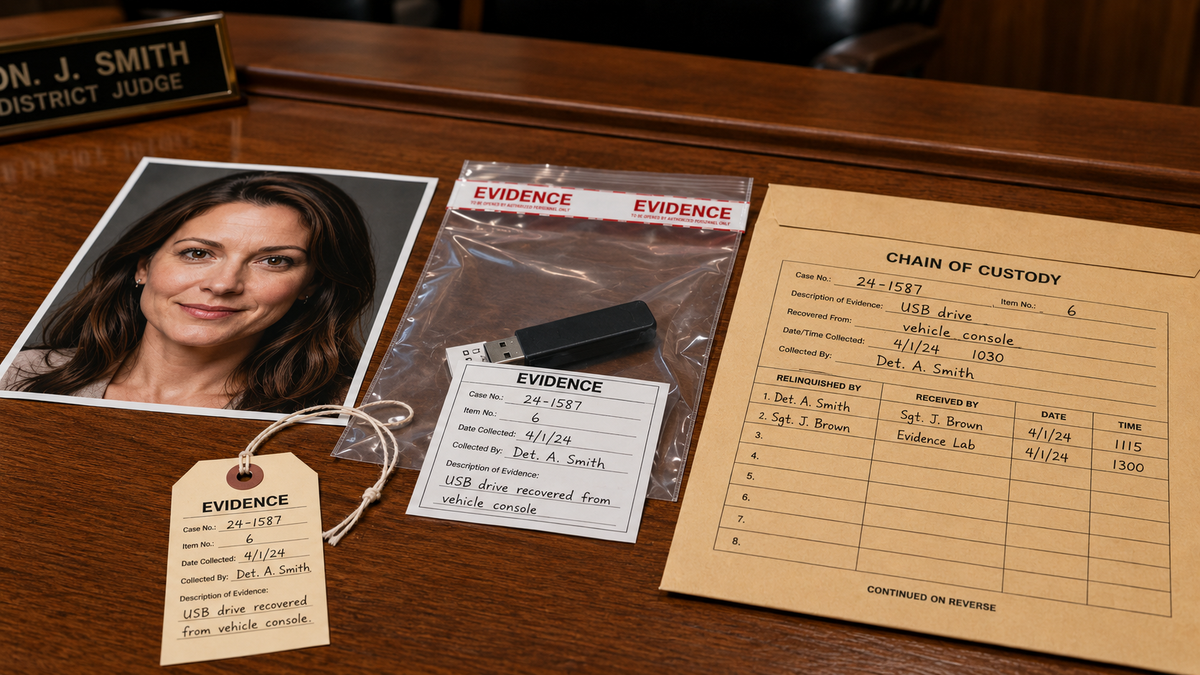
After the opponent makes that showing, the proponent should supply process proof matched to the claimed inference. The court may consider testimony from the person who captured the evidence, device records, platform records, timestamps, metadata, hash values, chain of custody, forensic review, or independent corroboration. The necessary foundation should scale with the evidence's role in the case and the specificity of the challenge.[30]
The standard also preserves the difference between authenticity and reliability. Authenticity asks whether the item is what the proponent claims. Reliability asks whether the process that generated, preserved, or tested the evidence deserves confidence. A file may be authentic as the file produced in discovery yet still require additional foundation before it can support the asserted event. Courts should keep those questions separate.[31]
VI. The Cost of Overcorrection
A process-proof rule should guard against fabrication without making genuine audiovisual evidence too expensive to use. A criminal defendant may have a phone video with incomplete metadata. A small business may have a recording and no forensic budget. A victim may have a screenshot, a voicemail, or a damaged device. If courts demand expensive authentication too often, the rule will favor parties with money, experts, and control over the relevant systems.[32]
The threshold showing is the rule's limiting principle. It prevents courts from requiring added process proof every time a party offers audiovisual evidence. The opponent need not prove fabrication, but the challenge must identify concrete grounds for suspecting AI generation or material alteration.
The amount of process proof should turn on the evidence's role in the case. A photograph offered to establish a background condition should require less foundation than a video offered to prove the central act in dispute. A recording that corroborates independent evidence should require less than a recording that supplies the only proof of identity. Courts should ask how much the item contributes to the disputed fact and how directly the opponent's challenge threatens that use.
In criminal cases, overcorrection can impair the defendant's ability to test the government's proof. A defendant challenging government audiovisual evidence needs access to the files, devices, metadata, and production history required to examine the exhibit. Courts should also avoid forcing the defense to reveal its theory before trial. Sequenced discovery, targeted expert disclosure, and pretrial admissibility hearings can allow meaningful testing while keeping the authentication dispute from becoming an early trial on the merits.[33]
Civil cases raise a different form of overcorrection. A party may invoke a deepfake allegation to increase cost, delay proceedings, or pressure settlement. The concrete-showing requirement limits that tactic by requiring the challenge to target the exhibit, the inference the exhibit is offered to support, and the practical consequences of admitting or excluding it.[34]
VII. Boardrooms to Courtrooms
Before the credibility discount reaches court, it will change how institutions create, verify, and preserve audiovisual proof. Companies will require second-channel confirmation before major transfers. Boards will adopt procedures for verifying video instructions and remote approvals. Compliance departments will preserve source records with greater care. Law firms will ask who created a file, how it was preserved, and whether independent evidence confirms it before arguing what it shows.[35]
Those institutional responses bring Rule 901's premise into ordinary practice: a party relying on audiovisual evidence must be able to connect the item to the claim made about it. When audio and video seemed more direct, that foundation was often easy to supply and less often contested. Generative AI makes the same foundation work harder to avoid.
Public expectations will change for the same reason institutional practices will change. People will know that audiovisual evidence can be manufactured. Citizens who encounter synthetic audiovisual evidence in ordinary life will bring that experience into investigations, negotiations, agency proceedings, and jury service. That experience may help them resist manipulation. It may also give a wrongdoer a ready way to deny genuine evidence. Courts can separate those situations by requiring concrete grounds for a deepfake challenge before placing any additional burden on the proponent.
Because detection can falter outside controlled settings, courts should resist treating any single method as dispositive. NIST's reported degradation in detection performance explains why detection cannot carry the full authentication burden.[36] Provenance standards can help establish origin and handling[37], while the truth of the depicted event may require other evidence. Human judgment remains necessary and fallible. A layered evidentiary approach is more realistic: source, custody, metadata, corroboration, forensic review, witness testimony, and Rule 403 scrutiny when the risk of misleading the jury is substantial.[38]
Conclusion
Deepfakes leave audiovisual evidence in place while lowering the confidence that appearance alone can command. Audio, video, and photographs will remain common in trials, investigations, compliance reviews, and board decisions. Their force will increasingly depend on process proof: source, custody, metadata, corroboration, and, when needed, forensic review.
Existing evidence doctrine already points to that result. Rule 901 asks whether the item is what the proponent claims it is. Rule 902 may establish authenticity for certain records and electronic evidence, but it does not resolve what the content means or whether the depicted event occurred. Rule 702 governs expert testimony when specialized knowledge is offered to explain, test, or evaluate the item. Deepfakes make the same doctrinal tools more claim-specific: courts should ask what inference the proponent seeks to draw and whether the foundation supports that inference.[39]
The credibility discount gives Rule 901 a more precise task: separating warranted doubt from unsupported denial. A recording may remain probative while carrying less automatic trust. A video may still persuade, but a concrete deepfake challenge should require proof of source, custody, metadata, or corroboration matched to the claim made about the exhibit. That threshold matters in both directions. The same technology that makes false evidence more believable can also make genuine evidence easier to deny.
Seeing may persuade, but Rule 901 requires more than visual confidence. Audiovisual evidence should carry force when the proponent can show what the exhibit is, where it came from, how it was preserved, and why it supports the factual inference for which it is offered.
Nat'l Inst. of Standards & Tech., GenAI: Deepfakes 2026, AI Challenges, https://ai-challenges.nist.gov/forensics (last visited May 18, 2026); Nuria Alina Chandra et al., Deepfake-Eval-2024: A Multi-Modal In-the-Wild Benchmark of Deepfakes Circulated in 2024, arXiv:2503.02857, at 1 (Mar. 4, 2025), https://arxiv.org/abs/2503.02857. ↩︎
Kimberly T. Mai, Sergi Bray, Toby Davies & Lewis D. Griffin, Warning: Humans Cannot Reliably Detect Speech Deepfakes, 18 PLOS ONE e0285333, at 1 (2023), https://doi.org/10.1371/journal.pone.0285333. ↩︎
Fed. R. Evid. 901(a); see also Fed. R. Evid. 901(b)(1), (4), (5), (9). ↩︎
Fed. R. Evid. 403; see also Old Chief v. United States, 519 U.S. 172, 180–85 (1997). ↩︎
Dan Milmo, Company Worker in Hong Kong Pays Out £20m in Deepfake Video Call Scam, Guardian (Feb. 5, 2024), https://www.theguardian.com/world/2024/feb/05/hong-kong-company-deepfake-video-conference-call-scam; Dan Milmo, UK Engineering Firm Arup Falls Victim to £20m Deepfake Scam, Guardian (May 17, 2024), https://www.theguardian.com/technology/article/2024/may/17/uk-engineering-arup-deepfake-scam-hong-kong-ai-video. ↩︎
Robert Chesney & Danielle Keats Citron, Deep Fakes: A Looming Challenge for Privacy, Democracy, and National Security, 107 Calif. L. Rev. 1753, 1785–86 (2019). ↩︎
See Fed. R. Evid. 901(a), (b)(1), (4), (5), (9); Fed. R. Evid. 902(13), (14); United States v. Vayner, 769 F.3d 125, 131–33 (2d Cir. 2014); United States v. Browne, 834 F.3d 403, 412–13 (3d Cir. 2016); United States v. Barnes, 803 F.3d 209, 217 (5th Cir. 2015); Advisory Comm. on Evidence Rules, Report of the Advisory Committee on Evidence Rules 5–7 (Dec. 1, 2025), in Comm. on Rules of Practice & Procedure, Agenda Book 282, 286–88 (Jan. 6, 2026), https://www.uscourts.gov/sites/default/files/document/2025-12-01_evidence_rules_committee_report.pdf. ↩︎
See Jessica Silbey, Judges as Film Critics: New Approaches to Filmic Evidence, 37 U. Mich. J.L. Reform 493, 499–508 (2004); Caren Myers Morrison, Body Camera Obscura: The Semiotics of Police Video, 54 Am. Crim. L. Rev. 791, 797–807 (2017). ↩︎
See Jennifer L. Mnookin, The Image of Truth: Photographic Evidence and the Power of Analogy, 10 Yale J.L. & Human. 1, 1–8 (1998); Jessica Silbey, Judges as Film Critics: New Approaches to Filmic Evidence, 37 U. Mich. J.L. Reform 493, 499–508 (2004); Caren Myers Morrison, Body Camera Obscura: The Semiotics of Police Video, 54 Am. Crim. L. Rev. 791, 797–807 (2017). ↩︎
See Jennifer L. Mnookin, The Image of Truth: Photographic Evidence and the Power of Analogy, 10 Yale J.L. & Human. 1, 1–8 (1998); Scott v. Harris, 550 U.S. 372, 378–81 (2007). ↩︎
See Rebecca A. Delfino, Deepfakes on Trial: A Call To Expand the Trial Judge's Gatekeeping Role To Protect Legal Proceedings from Technological Fakery, 74 Hastings L.J. 293, 300–12 (2023); John P. LaMonaca, A Break from Reality: Modernizing Authentication Standards for Digital Video Evidence in the Era of Deepfakes, 69 Am. U. L. Rev. 1945, 1952–67 (2020). ↩︎
Nat'l Inst. of Standards & Tech., GenAI: Deepfakes 2026, AI Challenges, https://ai-challenges.nist.gov/forensics (last visited May 18, 2026). ↩︎
Nat'l Inst. of Standards & Tech., GenAI: Deepfakes 2026, AI Challenges, https://ai-challenges.nist.gov/forensics (last visited May 18, 2026); Nuria Alina Chandra et al., Deepfake-Eval-2024: A Multi-Modal In-the-Wild Benchmark of Deepfakes Circulated in 2024, arXiv:2503.02857, at 1 (Mar. 4, 2025), https://arxiv.org/abs/2503.02857. ↩︎
Kimberly T. Mai, Sergi Bray, Toby Davies & Lewis D. Griffin, Warning: Humans Cannot Reliably Detect Speech Deepfakes, 18 PLOS ONE e0285333, at 1 (2023), https://doi.org/10.1371/journal.pone.0285333. ↩︎
Id. at 1. ↩︎
Stanford Inst. for Hum.-Centered Artificial Intelligence, Artificial Intelligence Index Report 2025 (2025), https://hai.stanford.edu/ai-index/2025-ai-index-report. ↩︎
FBI Internet Crime Complaint Ctr., Alert No. I-120324-PSA, Criminals Use Generative Artificial Intelligence to Facilitate Financial Fraud (Dec. 3, 2024), https://www.ic3.gov/PSA/2024/PSA241203. ↩︎
Dan Milmo, Company Worker in Hong Kong Pays Out £20m in Deepfake Video Call Scam, Guardian (Feb. 5, 2024), https://www.theguardian.com/world/2024/feb/05/hong-kong-company-deepfake-video-conference-call-scam; Dan Milmo, UK Engineering Firm Arup Falls Victim to £20m Deepfake Scam, Guardian (May 17, 2024), https://www.theguardian.com/technology/article/2024/may/17/uk-engineering-arup-deepfake-scam-hong-kong-ai-video. ↩︎
Fed. R. Evid. 901(a); see also Lorraine v. Markel Am. Ins. Co., 241 F.R.D. 534, 542–45 (D. Md. 2007); United States v. Vayner, 769 F.3d 125, 131–33 (2d Cir. 2014). ↩︎
See United States v. Vayner, 769 F.3d 125, 131–33 (2d Cir. 2014); United States v. Browne, 834 F.3d 403, 412–13 (3d Cir. 2016); United States v. Hassan, 742 F.3d 104, 133–34 (4th Cir. 2014); United States v. Barnes, 803 F.3d 209, 217 (5th Cir. 2015); Tienda v. State, 358 S.W.3d 633, 638–42 (Tex. Crim. App. 2012); Griffin v. State, 19 A.3d 415, 421–24 (Md. 2011). ↩︎
Fed. R. Evid. 902(13), (14); Fed. R. Evid. 902 advisory committee's note to 2017 amendment; see also Lorraine v. Markel Am. Ins. Co., 241 F.R.D. 534, 542–45 (D. Md. 2007). ↩︎
Advisory Comm. on Evidence Rules, Report of the Advisory Committee on Evidence Rules 5–7 (Dec. 1, 2025), in Comm. on Rules of Practice & Procedure, Agenda Book 282, 286–88 (Jan. 6, 2026), https://www.uscourts.gov/sites/default/files/document/2025-12-01_evidence_rules_committee_report.pdf; Nate Raymond, US Judicial Panel Delays Action on AI-Generated Evidence, Deep Fakes, Reuters (May 7, 2026), https://www.reuters.com/legal/government/us-judicial-panel-delays-action-ai-generated-evidence-deep-fakes-2026-05-07/. ↩︎
Advisory Comm. on Evidence Rules, Report of the Advisory Committee on Evidence Rules 2–4, 13–24 (Dec. 1, 2025), in Comm. on Rules of Practice & Procedure, Agenda Book 282, 283–85, 295–306 (Jan. 6, 2026), https://www.uscourts.gov/sites/default/files/document/2025-12-01_evidence_rules_committee_report.pdf; Fed. R. Evid. 702; Nate Raymond, US Judicial Panel Delays Action on AI-Generated Evidence, Deep Fakes, Reuters (May 7, 2026), https://www.reuters.com/legal/government/us-judicial-panel-delays-action-ai-generated-evidence-deep-fakes-2026-05-07/. ↩︎
See Robert Chesney & Danielle Keats Citron, Deep Fakes: A Looming Challenge for Privacy, Democracy, and National Security, 107 Calif. L. Rev. 1753, 1785–86 (2019); Rebecca A. Delfino, Deepfakes on Trial: A Call To Expand the Trial Judge's Gatekeeping Role To Protect Legal Proceedings from Technological Fakery, 74 Hastings L.J. 293, 312–26 (2023); John P. LaMonaca, A Break from Reality: Modernizing Authentication Standards for Digital Video Evidence in the Era of Deepfakes, 69 Am. U. L. Rev. 1945, 1967–81 (2020). ↩︎
Robert Chesney & Danielle Keats Citron, Deep Fakes: A Looming Challenge for Privacy, Democracy, and National Security, 107 Calif. L. Rev. 1753, 1769–86 (2019). ↩︎
Robert Chesney & Danielle Keats Citron, Deep Fakes: A Looming Challenge for Privacy, Democracy, and National Security, 107 Calif. L. Rev. 1753, 1769–86 (2019). ↩︎
Robert Chesney & Danielle Keats Citron, Deep Fakes: A Looming Challenge for Privacy, Democracy, and National Security, 107 Calif. L. Rev. 1753, 1785–86 (2019). ↩︎
See United States v. Peterson, 945 F.3d 144, 157 (4th Cir. 2019); Lee v. City of Troy, 339 F.R.D. 346, 367–68 (N.D.N.Y. 2021); Advisory Comm. on Evidence Rules, Report of the Advisory Committee on Evidence Rules 6 (Dec. 1, 2025), in Comm. on Rules of Practice & Procedure, Agenda Book 282, 287 (Jan. 6, 2026), https://www.uscourts.gov/sites/default/files/document/2025-12-01_evidence_rules_committee_report.pdf. ↩︎
See Advisory Comm. on Evidence Rules, Report of the Advisory Committee on Evidence Rules 5–7 (Dec. 1, 2025), in Comm. on Rules of Practice & Procedure, Agenda Book 282, 286–88 (Jan. 6, 2026), https://www.uscourts.gov/sites/default/files/document/2025-12-01_evidence_rules_committee_report.pdf; United States v. Peterson, 945 F.3d 144, 157 (4th Cir. 2019); Lee v. City of Troy, 339 F.R.D. 346, 367–68 (N.D.N.Y. 2021). ↩︎
See Fed. R. Evid. 901(b)(1), (4), (5), (9); Lorraine v. Markel Am. Ins. Co., 241 F.R.D. 534, 542–45 (D. Md. 2007); United States v. Vayner, 769 F.3d 125, 131–33 (2d Cir. 2014); United States v. Browne, 834 F.3d 403, 412–13 (3d Cir. 2016); United States v. Hassan, 742 F.3d 104, 133–34 (4th Cir. 2014); United States v. Barnes, 803 F.3d 209, 217 (5th Cir. 2015). ↩︎
See Fed. R. Evid. 901(a); Fed. R. Evid. 902 advisory committee's note to 2017 amendment; Fed. R. Evid. 702; Andrea Roth, Machine Testimony, 126 Yale L.J. 1972, 1980–95 (2017); Andrea Roth, How Machines Reveal the Gaps in Evidence Law, 76 Vand. L. Rev. 1631, 1640–59 (2023). ↩︎
See Rebecca A. Delfino, Deepfakes on Trial: A Call To Expand the Trial Judge's Gatekeeping Role To Protect Legal Proceedings from Technological Fakery, 74 Hastings L.J. 293, 326–41 (2023); Andrea Roth, Machine Testimony, 126 Yale L.J. 1972, 1996–2020 (2017). ↩︎
See Fed. R. Crim. P. 16(a)(1)(E), (F), (G), (b)(1)(C); Fed. R. Evid. 104(a); Bourjaily v. United States, 483 U.S. 171, 175–76 (1987); Daubert v. Merrell Dow Pharms., Inc., 509 U.S. 579, 589–95 (1993); Kumho Tire Co. v. Carmichael, 526 U.S. 137, 147–52 (1999). ↩︎
See Fed. R. Civ. P. 1; Fed. R. Evid. 403; Old Chief v. United States, 519 U.S. 172, 180–85 (1997); Advisory Comm. on Evidence Rules, Report of the Advisory Committee on Evidence Rules 5–7 (Dec. 1, 2025), in Comm. on Rules of Practice & Procedure, Agenda Book 282, 286–88 (Jan. 6, 2026), https://www.uscourts.gov/sites/default/files/document/2025-12-01_evidence_rules_committee_report.pdf. ↩︎
See FBI Internet Crime Complaint Ctr., Alert No. I-120324-PSA, Criminals Use Generative Artificial Intelligence to Facilitate Financial Fraud (Dec. 3, 2024), https://www.ic3.gov/PSA/2024/PSA241203; Dan Milmo, UK Engineering Firm Arup Falls Victim to £20m Deepfake Scam, Guardian (May 17, 2024), https://www.theguardian.com/technology/article/2024/may/17/uk-engineering-arup-deepfake-scam-hong-kong-ai-video; Coal. for Content Provenance & Authenticity, C2PA Specifications 2.2 (2025), https://spec.c2pa.org/specifications/specifications/2.2/index.html. ↩︎
Nat'l Inst. of Standards & Tech., GenAI: Deepfakes 2026, AI Challenges, https://ai-challenges.nist.gov/forensics (last visited May 18, 2026); Nuria Alina Chandra et al., Deepfake-Eval-2024: A Multi-Modal In-the-Wild Benchmark of Deepfakes Circulated in 2024, arXiv:2503.02857, at 1 (Mar. 4, 2025), https://arxiv.org/abs/2503.02857. ↩︎
Coal. for Content Provenance & Authenticity, C2PA Specifications 2.2 (2025), https://spec.c2pa.org/specifications/specifications/2.2/index.html; Coal. for Content Provenance & Authenticity, C2PA, https://c2pa.org (last visited May 18, 2026). ↩︎
See Nat'l Inst. of Standards & Tech., GenAI: Deepfakes 2026, AI Challenges, https://ai-challenges.nist.gov/forensics (last visited May 18, 2026); Coal. for Content Provenance & Authenticity, C2PA Specifications 2.2 (2025), https://spec.c2pa.org/specifications/specifications/2.2/index.html; Fed. R. Evid. 901(a), (b); Fed. R. Evid. 403. ↩︎
See Fed. R. Evid. 901(a); Fed. R. Evid. 902(13), (14); Fed. R. Evid. 702; United States v. Vayner, 769 F.3d 125, 131–33 (2d Cir. 2014); United States v. Browne, 834 F.3d 403, 412–13 (3d Cir. 2016). ↩︎